

Information about the Kanze School
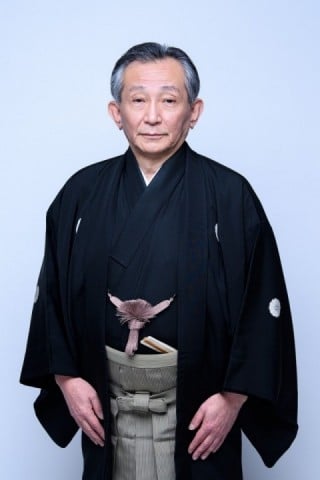
The 26th Head of the Kanze Family
The 26th head of the Kanze school, a descendant of the founders Kan'ami, Zeami, and On'ami, carries on a 700-year tradition.
In addition to performances within Japan, they have also performed overseas in countries such as France, India, Thailand, China, the United States, Germany, Poland, and Lithuania.
He is a leading figure in the current Noh world, actively working on the revival of plays such as "Hakozaki," "Akoya Matsu," and "Kamo Monogurui," as well as new Noh plays such as "The Conversion of Saint Paul" and "Rikyu."
In particular, their invited performances at Lincoln Center in New York in July 2016 (6 shows over 5 days) were a great success, with sold-out shows every day and receiving extremely high praise from critics.
Furthermore, the Kanze Bunko Foundation was established to house Noh masks, costumes, and transmission documents passed down through the Kanze family. The Kanze Archive (online) also makes many transmission documents and other materials, including Zeami's handwritten manuscripts, widely available, and is dedicated to the research and dissemination of Noh. In 2011, during the Great East Japan Earthquake, the Kanze family energetically held Noh performances to mourn the victims and raise funds for reconstruction. In 2017, the Kanze Noh Theater in Shoto, Shibuya Ward, was relocated to Ginza, a place associated with the Kanze family, marking its return after approximately 150 years.
In October 2019, at the "Enthronement Ceremony of His Majesty the Emperor and the Banquet Hosted by the Prime Minister and His Wife," he and his eldest son, Saburota, performed the celebratory song "Ishibashi" for the Japanese government representatives, heads of state, representatives, and congratulatory delegations from various countries who had come to Japan.
Furthermore, he has served as a councilor of the Japan Arts Council, contributing to the preservation and transmission of traditional Japanese arts, and has also been involved in training the next generation of performers as a visiting professor at the Tokyo University of the Arts Faculty of Music and chief instructor for the training of the three main roles at the National Noh Theatre.
His published works, co-authored works, and supervised works include "Let's Watch Noh with Kanze Kiyokazu" (Iwasaki Shoten), "A New Translation of Fūshikaden" (PHP), "Noh is This Interesting" (Shogakukan), and "Kanze Family Noh Calendar" (Tankosha).
Chairman of the Nohgaku Sokekai Association, Chairman of the Board of Directors of the Kanze Bunko Foundation, Chairman of the Board of Directors of the Kanze-kai Association, Visiting Professor at Tokyo University of the Arts, Executive Director and Vice Chairman of the Japan Nohgaku Association, Advisor to the Nohgaku Association.
Vice Chairman of the Japan-China Cultural Exchange Association.
Recipient of numerous awards, including the Minister of Education, Culture, Sports, Science and Technology Award for New Artists, the French Order of Arts and Letters (Chevalier), the Shibuya Ward 70th Anniversary Special Commendation, the Minister of Education, Culture, Sports, Science and Technology Award for Artists, the Pola Award for Traditional Culture Grand Prize, the JXTG Music Award, the Purple Ribbon Medal, and the Japan Art Academy Prize.
Appointed as a member of the Japan Art Academy in 2023. Recognized and honored as a Person of Cultural Merit in the same year.
Holder of the Comprehensive Designation of Important Intangible Cultural Property.
History of the Kanze School
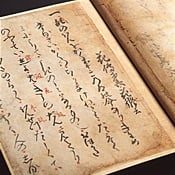
Kan'ami, along with his son Zeami, moved to Kyoto and gained the recognition of Ashikaga Yoshimitsu, the third shogun of the Muromachi shogunate at the time. Under his patronage, he expanded his influence throughout the country.
The Noh of the Kanze troupe, which absorbed the aristocratic culture of the capital, was further refined and deepened as an art form by Kan'ami and his son Zeami. Zeami, who succeeded Kan'ami and became the second Kanze Taifu, established the original style of Mugen Noh and demonstrated outstanding talent by writing groundbreaking treatises on performing arts such as "Fūshikaden." Zeami, who elevated Noh to an art form permeated with profound human studies and philosophy, is now a giant in art history, attracting attention and reverence not only in Japan but also around the world.
Zeami's son, Motomasa, died young, so his nephew, On'ami, inherited the position of head of the Kanze troupe. From then on, successive heads of the troupe, with the protection of those in power at the time, passed down the Kanze style of Noh to future generations.
With the arrival of the Edo period, the Tokugawa shogunate designated Noh as ceremonial music (music and performing arts performed at shogunate ceremonies), and among the various schools, it particularly favored the Kanze school, leading to the Kanze school experiencing its golden age since the time of the Kanze father and son.
During this period, the so-called iemoto system (headmaster system) was established, and Noh performance itself became more dignified and suitable for public events. It is believed that the style of Noh performed today was largely formed during this time.
With the Meiji Restoration, the Edo shogunate fell, and the Kanze school, which had received a stipend from the shogunate, found itself in a difficult situation. However, through the efforts of the head of the school and others, it gradually recovered, and during the time of the 24th head of the school, Kanze Sakon Motoshige, all of the performance repertoire was compiled and the "Kanze School Complete Edition" Noh libretto was published.
In the Showa era, successive world wars fundamentally destroyed the cultural life of the Japanese people. Furthermore, as postwar control policies threatened to suppress traditional Japanese culture, the Kanze school also faced another difficult period. However, Noh actors, including the 25th Kanze Sakon Motomasa, persevered in preserving the transmission of Noh and training successors. Now, in the Heisei era, with the 26th Kanze Kiyokazu leading the world of traditional performing arts, the Kanze school has become the largest school with approximately 900 Noh actors, and Noh is once again poised to enter a new golden age.
(commentary)
In the world of Noh theater, the head of the school is called the "Soke" (宗家), but originally this was a title bestowed upon the Kanze no Tayu (大主) by the Tokugawa Shogunate. Also, the title "26th generation" is different from "26th generation"; it was originally a title bestowed by Daitoku-ji Temple in Kyoto as a name given when one became a monk, and from the time of the 15th generation onwards, it became permissible to use the title without becoming a monk.
A Brief Genealogy of the Kanze Tayu Family
 | A Brief Genealogy of the Kanze Tayu Family (2009-10-10 ・ 1647KB) |